inspiring travel
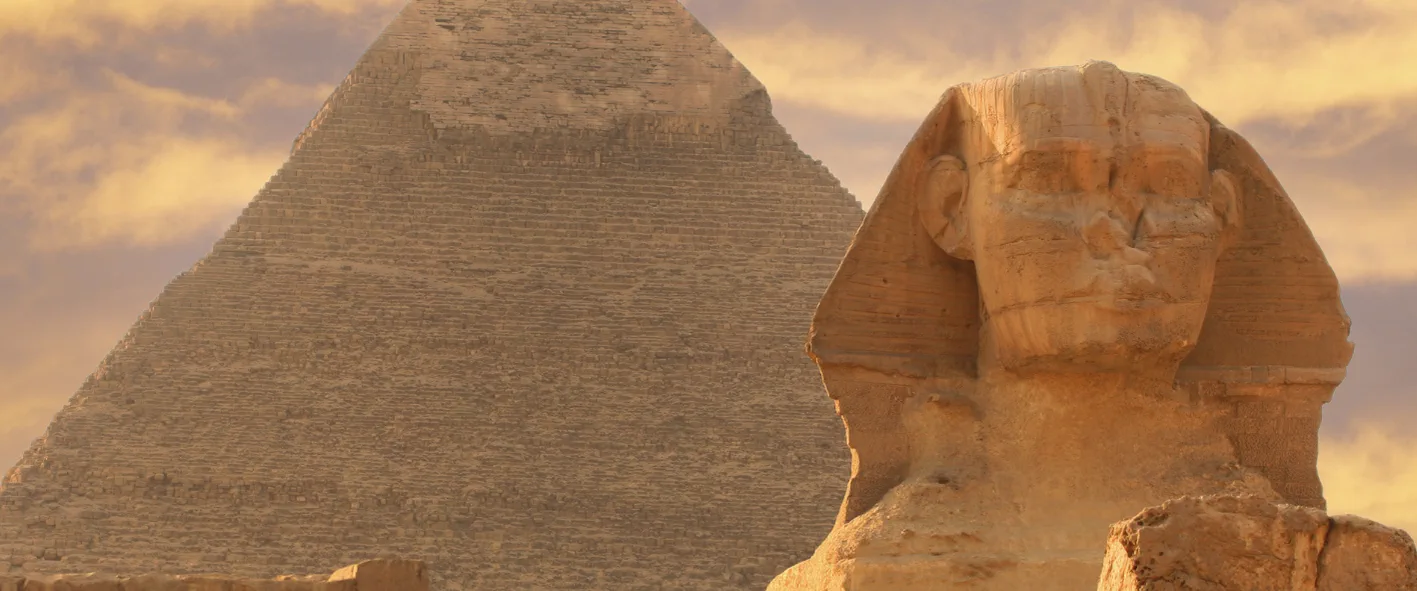
The Great Pyramid of Giza emerging from morning desert haze at first light
North Africa · Egypt

Five thousand years
waiting for you in silence

Egypt is the oldest organised spectacle on Earth, and it still has the power to leave a person speechless. We design access most visitors never see, the Giza plateau before the gates open, a private felucca at Aswan, and the tomb of Seti I in the Valley of the Kings after the last group has left.

Design your Egypt journey →
Scroll

Egypt operates on two levels at once: the version that exists in photographs, and the one you find by arriving before the crowds, or lingering after they leave. The Pyramids of Giza, seen from the western edge of the plateau at 6am with only a camel handler and a brightening sky for company, carry a weight that three thousand years of accumulated wonder have built.

The Nile between Luxor and Aswan is slower, a river that hasn't changed its agricultural character in forty centuries, with feluccas still sailing against the same north wind. The Valley of the Kings at dusk, after the tour buses have gone, is simply the most haunting place on Earth.

We layer Egypt's chronological depth into journeys that move from the Old Kingdom at Giza to the New Kingdom temples of Luxor, and on to Abu Simbel, Ramesses II's monument to himself, still stunning after three thousand years of seeking humility.

Signature experiences

How we design
your Egypt

The Sphinx and Pyramid of Khafre in the soft amber light of early dawn
Heritage

Giza before the gates open

With a special access permit, we arrange entry to the Giza plateau before the official 8am opening, arrival is typically around 6am, when the site belongs to no one but two security guards and the shifting desert light. Your Egyptologist explains the three pyramids' alignment with Orion's belt, the still-debated construction logistics, and the graffiti left by ancient workers on blocks that were never meant to be seen. The interior of the Great Pyramid is also visited in this pre-crowd window: just you, the King's Chamber, and the low granite sarcophagus that has stood empty for 4,500 years.

Traditional felucca sailing past the green banks of the Nile near Aswan at sunset
Slow Travel

A private felucca between Aswan and Kom Ombo

A chartered felucca, the traditional wooden lateen-sailed boat, is the unhurried way to understand why the Nile built a civilisation. The two-day sail north from Aswan to Kom Ombo covers the same stretch of river that supplied the sandstone for the temples now lining its banks. You sleep on cushioned decks under desert stars, eat meals cooked over a small brazier by the captain's brother, and stop at Elephantine Island in late afternoon to watch the sun set over the granite boulders of the first cataract. This is not luxury in the conventional sense, it's something better.

Abu Simbel temple facade carved into the cliffsides above the Nile in golden afternoon light
Adventure

Abu Simbel by private helicopter

The usual route to Abu Simbel involves a 3am convoy across the Western Desert from Aswan. We arrange a private helicopter instead, arriving over the temple site just as the morning light begins striking the four colossal seated figures of Ramesses II from the east, exactly as the pharaoh intended when he commissioned the temple's orientation. Inside, the hypostyle hall retains original painted reliefs in colours that could have been applied last year. The helicopter returns via the High Dam and Lake Nasser, whose scale, 500 kilometres long, makes the engineering feat of relocating Abu Simbel entirely to save it from the water feel, paradoxically, modest.

A suggested journey

12 days
along the backbone of civilisation

This itinerary moves from Cairo's layered urban intensity south through the Nile Valley to Abu Simbel, finishing on the Red Sea at Marsa Alam or Sharm El Sheikh. Best October to April, when temperatures in Upper Egypt stay pleasant and the morning light sits low and golden.

Day 1–2

Cairo, Giza, the Egyptian Museum, Khan el-Khalili

Arrival in Cairo and a start with the ground floor of the Egyptian Museum, the Tutankhamun galleries, the Royal Mummies Room, the Narmer Palette. Your Egyptologist sets the chronological context ahead of the plateau visit the following dawn. The medieval Islamic quarter around Al-Azhar Mosque offers an evening that has nothing to do with pharaohs and everything to do with Cairo's layered character.

Day 3–4

Luxor, Karnak, Valley of the Kings, Hatshepsut

Morning flight south to Luxor, then straight to the Valley of the Kings ahead of the 9am rush. The tombs of Ramesses VI and Seti I are the priority; your guide traces the Book of the Dead texts from entrance corridor to burial chamber. Karnak Temple at dusk, walking the ram-headed sphinx avenue as the light turns orange, requires a private guide arrangement to linger past closing.

Day 5–6

Aswan, felouque sail, Philae Temple, a Nubian village

The felucca departs from Aswan's corniche in early afternoon, sailing south past Kitchener's Island (a botanical garden of improbably English character) and stopping at a Nubian village for tea. Philae Temple, dedicated to Isis and moved stone by stone during the Aswan Dam project, is best at golden hour once the tour groups have left and the temple's island setting makes sense again.

Day 7–8

Abu Simbel, private helicopter access

The helicopter departs at 6:30am, arriving at sunrise when, on 22 February and 22 October, the light penetrates the inner sanctuary to illuminate the four seated gods. Even on ordinary mornings, the colossal facade stops conversation. A full morning is spent inside and around both temples before the helicopter returns skimming the lake's silvered surface.

Day 9–12

Red Sea, Marsa Alam or Sinai diving

The Red Sea's coral gardens are among the most intact on Earth, reef sharks patrol the Elphinstone drop-offs, dugongs graze the seagrass beds near Marsa Mubarak, and the Thistlegorm wreck in the Sinai offers a two-hour dive through a preserved 1941 cargo ship. A private liveaboard guarantees access to sites that day boats never reach before noon.

Frequently asked

Questions &
answers

When is the best time to visit Egypt?

The best time to visit Egypt is October to April, avoiding the intense summer heat.

How many days should I plan for Egypt?

We typically design Egypt journeys of 7 to 10 days, always tailored to your pace and the depth of experience you're looking for.

Do Belgian, French, Swiss or Luxembourg citizens need a visa for Egypt?

Yes, a visa on arrival or e-Visa, both straightforward, is required for these nationalities. We confirm the exact, current requirement for your nationality when we design your itinerary, as rules can change.

What budget should I expect for a StoryTailor journey to Egypt?

StoryTailor journeys are designed for travellers whose budget starts at around €5,000 per person, the exact figure depends on the season, the properties and experiences you choose, and the length of your trip.

Your Egyptian story
begins here.

We handle the permits, the private Egyptologists, and the precise timing that turns the most documented country on Earth into a genuinely personal encounter with deep time.

Begin your journey